Movie Website & Dashboard
Project Overview
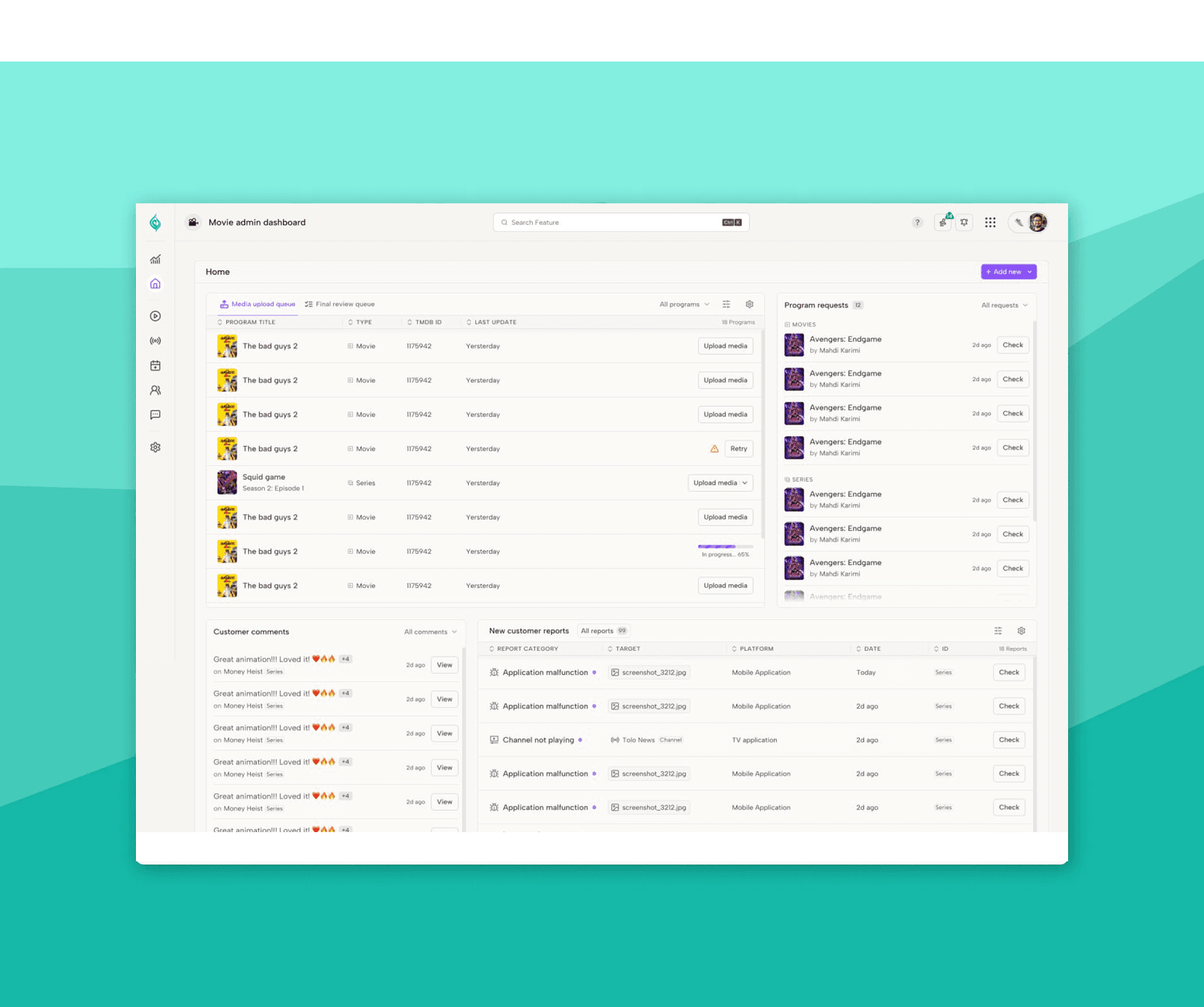
Built a full-featured Movie Website with an admin Dashboard that mirrors the structure of my other projects. The system includes content management (movies & series), AI-assisted translation, automatic metadata fetching from TMDB, channel/live stream management, event scheduling, and a customer/customer-interaction area with analytics.
Project Objectives
- Unified UI: Keep the same project structure and visual language as existing projects for consistency.
- Content Management: Provide easy CRUD for movies, series, channels, and events.
- Multilingual Support: Use AI to translate content into English, Persian, and Pashto.
- Metadata Enrichment: Auto-fetch posters, genres, release dates, and other metadata from the TMDB API.
- Analytics & Monitoring: Dashboard shows user activity, uploads, streaming stats, and engagement metrics.
- Live / Scheduled Channels: Manage live streams or scheduled channel programming from the admin panel.
- Customer Interaction: Track reviews, ratings, messages and user engagement history.
Key Sections
1. Overview Page
- Dashboard with charts and KPIs: active users, uploads, streams, watch time, retention.
- Time-range filters, device and region breakdowns, and exportable reports.
- Responsive, modern UI.
2. Home Page
- Recently added movies and TV series grid.
- Clickable items that open detailed pages with synopsis, cast, rating, trailer, and metadata.
- Search, filters (genre, year, rating), and pagination.
3. Program Section (Content Management)
- Add/edit movies and TV series manually or import via TMDB ID.
- AI integration for translating titles, descriptions, and metadata into English / Persian / Pashto.
- Automatic poster and metadata fetch from TMDB with manual override.
4. Channel Section
- Manage online networks / TV channels.
- Create live or scheduled channels (stream key management, schedule editor).
- Preview channel status, stream health, and uptime logs.
5. Events Section
- Schedule premieres, special releases, watch parties.
- Event pages with countdown, ticketing (optional), and RSVP/attendance tracking.
6. Customer Section
- Customer profiles, subscription/account details, watch history, payment status.
- Admin controls for account management and support actions.
7. Customer Interaction Section
- Reviews, ratings, comments moderation.
- Engagement feed: likes, watchlists, shares, support tickets.
- Sentiment overview and moderation tools.
Process and Methodology
- Start with a design audit to align styles with existing projects.
- Create data models and API routes for movies, series, channels, events, and customers.
- Implement TMDB integration with server-side fetch + background enrichment.
- Integrate AI translation to produce localized content.
- Build Dashboard pages with charts (recharts) and lightweight analytics.
- Add realtime capabilities for live channel status and event updates.
- Use role-based access control for Dashboard/Editor/Admin flows.
Challenges
- Multilingual consistency: keeping translated metadata aligned with original content.
- Live streaming orchestration: handling stream keys, scheduling, and status monitoring.
- Scaling analytics: aggregating streaming and engagement data efficiently.
Solutions
- AI + Human override: automatic translations with UI to review/edit translations.
- Stream management UI: clear channel workflow (create → configure keys → schedule → go live).
- Event-driven analytics pipeline: batched events to keep the dashboard performant.
Results and Impact
- Centralized content & channel management.
- Faster publishing workflow (import TMDB → translate → publish).
- Better visibility into user behavior and engagement through dashboard analytics.
- Improved moderation and customer support tools.
What I Did
- Frontend-stack architecture
- Dashboard & Analytics
- TMDB integration
- Live channel scheduling
- Events & Ticketing
- Customer management
- Moderation tools
Technology Stack
- Next.js (App Router)
- React
- TypeScript
- Tailwind CSS
- TMDB API
- Recharts / Chart.js
- NextAuth (auth)
- MinIO (media storage)
- Vercel